
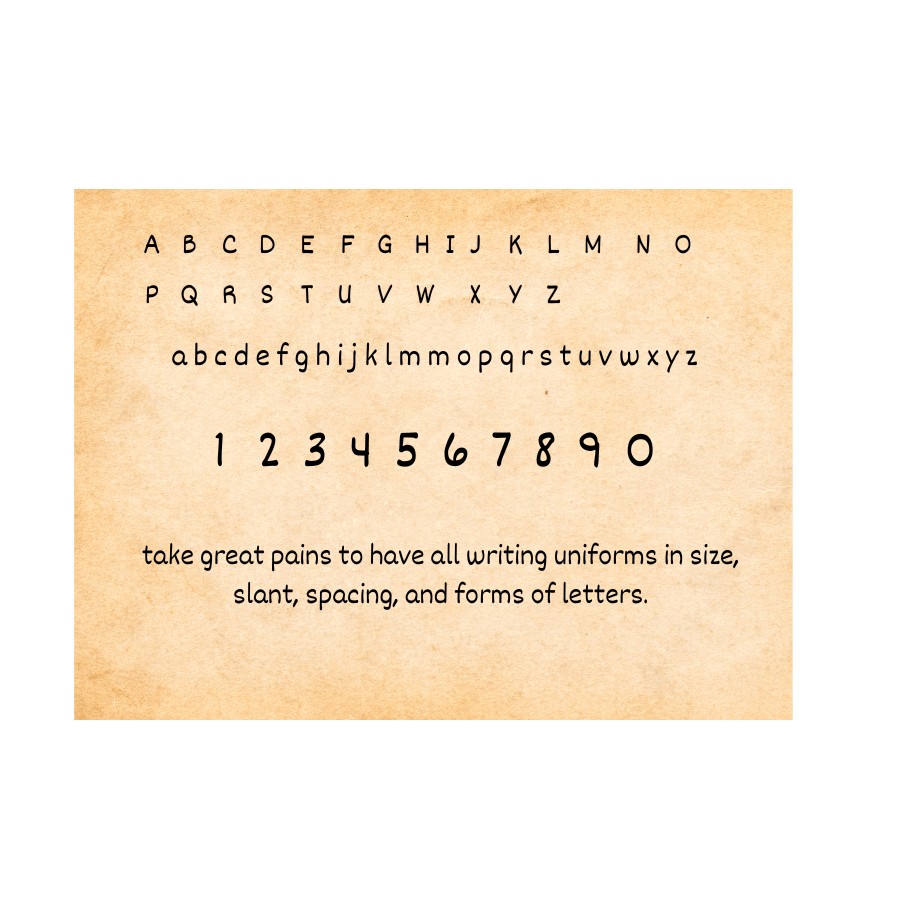
Have you ever heard of library hand? Library hand is a handwriting style that librarians learned to complete card catalog entries. The Library hand was rounded, open, and easily readable. It reached its highest level of use in the late 19th century but fell into decline in the early 20th century. Library card catalogs are now almost entirely digital databases. Each card included the book’s subject, authorship, and location on the shelves. Before the rise of typewriters, those cards were handwritten and became valuable tools that could be for users. Library hand became the style in which they were created. Books were being published in the late 1800s and libraries began to utilize catalogs. Information on books needed to be navigable, as information presented on those cards would need to correspond to the information on shelved and book spines. Some form of standardization was required to make card searching easier for library users. Library schools began to teach a standardized form of handwriting traditionally credited to library scientist Melvil Dewey and inventor Thomas Edison, which became known as the “Library Hand”. In 1903 handbook of the new york state library school contained a complete description of the library hand, even down to the correct pens, ink, and posture to use.
“It’s cool how librarians have there own handwriting style to complete catalog entries,” said Aryia Billie (10) said.

 Impressions